McDonald’s Cheeseburger: Calories, Protein, Sodium & Is It Worth Ordering?
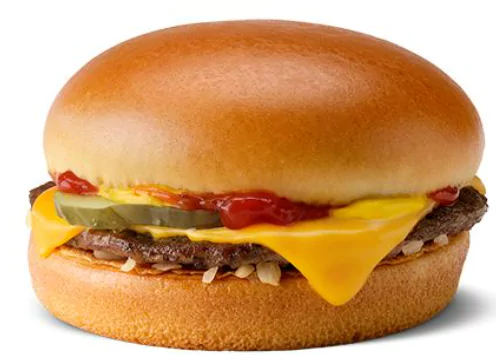
The McDonald’s Cheeseburger has 300 calories, 13g fat, 31g carbs, 15g protein, and 720mg sodium. It’s the lower-calorie cheese burger option when you want more protein than a Hamburger without moving up to a McDouble or Double Cheeseburger.
If your priority is more protein for the calories, the McDouble or Double Cheeseburger has a better protein-to-calorie ratio. If your priority is the fewest calories, the Hamburger wins at 250 calories. The rest of this page compares those trade-offs, including sodium, portion size, and what changes to your order actually make a difference. For the full category comparison, see the McDonald’s Burger Menu.
Numbers on a page are easy to skim past. Below, pick a side and a drink the way you actually would in the drive-thru line, and watch the bars fill in live. It’s already loaded with this sandwich’s 300 calories and 720mg sodium, so there’s nothing to type in before you see where your order lands against your day.
Cheeseburger vs. Other McDonald’s Burgers: Which Should You Get?
The real decision here isn’t “which burger wins” in general. It’s whether this specific sandwich is right for what you want, or whether you should size up. Raw protein grams don’t answer that, since the bigger burger always has more grams. The number that actually answers it is protein per 100 calories: how much protein you get for the calories you spend.
| Burger | Calories | Protein | Protein per 100 cal | Est. Price* |
|---|---|---|---|---|
| Hamburger | 250 | 12g | 4.8g | ~$1.50–$3.00 |
| Cheeseburger | 300 | 15g | 5.0g | ~$2.00–$3.90 |
| McDouble | 390 | 22g | 5.6g | ~$3.50–$4.80 |
| Double Cheeseburger | 440 | 25g | 5.7g | ~$3.50–$6.20 |
Estimated ranges based on national averages tracked across US locations; actual price varies significantly by market. Confirm the current price at your location via the McDonald’s app.
Bottom line for this comparison: the Cheeseburger is the right order if your ceiling is around 300 calories and 750mg sodium. It’s the only item in that range that gives you real protein (15g, 30% of your daily value) without going over either line. It sits in a real gap. It’s more filling than a plain Hamburger, without the extra 90-plus calories a McDouble or Double Cheeseburger costs you.
Size up only if protein per calorie, not total calories, is what you actually care about. That’s a different goal than what the Cheeseburger is built to solve, so it deserves its own full breakdown rather than a quick note here. See the McDouble page for its full pricing and nutrition, or the Double Cheeseburger page for its full breakdown.
Once you’ve settled on the sandwich, the next number worth checking is sodium, since it’s the one figure here that can quietly add up over the rest of your day.
McDonald’s Cheeseburger Sodium: What 720mg Means
720mg of sodium is 31% of the FDA’s recommended daily limit of 2,300mg, in one sandwich. That’s not a reason to skip it on its own, but it matters for what you order alongside it. A medium fries (260mg) and a regular Coke keeps you well under budget for the day. A medium fries plus a side of Spicy Buffalo Sauce (520mg) or Creamy Ranch (160mg) starts eating into the rest of your day’s allowance before you’ve even had a second meal.
Practical takeaway: if sodium is a real concern for you, the lever to pull isn’t skipping the Cheeseburger. It’s what you pair it with. Unsweetened Iced Tea (10 to 20mg sodium) or water costs you nothing extra here. A large soda plus a dipping sauce can roughly double the sandwich’s own sodium load. For a wider view of where other menu items fall on sodium, see the full nutrition menu.
That pairing question leads straight into the next one: what small changes to your order actually move the needle, and which ones don’t.
How to Order It Better (Save Calories or Money, Not Both at Once)
- To cut calories without losing protein: don’t bother asking to remove the cheese. It’s the protein source that separates this sandwich from a plain Hamburger. Instead, change the side. Swapping fries for apple slices (15 cal) saves 200 to 460 calories depending on fries size, which is a bigger change than anything you can do to the sandwich itself.
- To cut sodium without cutting the sandwich: the sandwich’s own sodium is fixed. The real choice is between this and the Double Cheeseburger, and between water or unsweetened tea versus soda. That’s where the sodium budget is actually won or lost.
- To get more for the same order: if you’re deciding between a single Cheeseburger and a McDouble, the extra cost is usually small next to the roughly 90 extra calories and the better protein ratio you get. Worth it if you’re not watching your calories closely that day.
- On price: McDonald’s prices are set by each location, so there’s no single verified nationwide figure. The Cheeseburger has historically been one of the cheapest individual sandwiches on the menu, alongside the plain Hamburger — check the McDonald’s app for your location’s current price rather than trusting a number quoted anywhere online, since it changes and varies by market. If you’re stacking a Cheeseburger into a bigger order, the McValue meal deals are worth a look too.
With the sandwich and the order both settled, here’s the full nutrition panel for reference.
Full Nutrition Reference
| Nutrient | Amount | % Daily Value (2,000 cal diet) |
|---|---|---|
| Calories | 300 | 15% |
| Total Fat | 13g | 17% |
| Carbohydrates | 31g | 11% |
| Protein | 15g | 30% |
| Sodium | 720mg | 31% |
Resolved pick for this item: the best default choice if you want a sandwich with real protein that stays under 300 calories and under 750mg sodium. Order it as is. Don’t add extra cheese or sauce packets if you’re managing either number.
FAQ
Is the McDonald’s Cheeseburger healthy?
It’s a moderate fast-food choice, not a health food. A Cheeseburger has about 300 calories and 15g of protein, but also around 720mg of sodium.
Cheeseburger vs. McDouble: Which should I choose?
Choose the Cheeseburger for fewer calories. Pick the McDouble if you want more protein and don’t mind the extra calories.
How much protein is in a McDonald’s Cheeseburger?
A McDonald’s Cheeseburger contains 15 grams of protein, making it a decent protein option for a small fast-food sandwich.
Is the Cheeseburger cheaper than the Hamburger?
No. The Cheeseburger usually costs slightly more than the Hamburger because it includes a slice of cheese. Prices vary by location, so check the McDonald’s app for the current price.
Bottom Line
Order the Cheeseburger when you want real protein (15g) while staying under 300 calories and under 750mg sodium. That’s the specific gap it fills better than the Hamburger (less protein) or the McDouble (more calories). Step up to the McDouble only if protein per calorie, not total calories, is what you actually care about. Either way, the bigger lever for both your calorie and sodium budget is what you order beside the sandwich, not which of these four burgers you pick.
Still deciding what else to add to your order? Browse the full McDonald’s menu with prices for everything else on offer.